RAMiller 3D Logo

Innovating therapies for treatment-refractory cancers and rare neuromuscular disease

About Us

RAMiller is a clinical-stage biotechnology company focused on developing innovative drugs for patients with unmet medical needs, including:

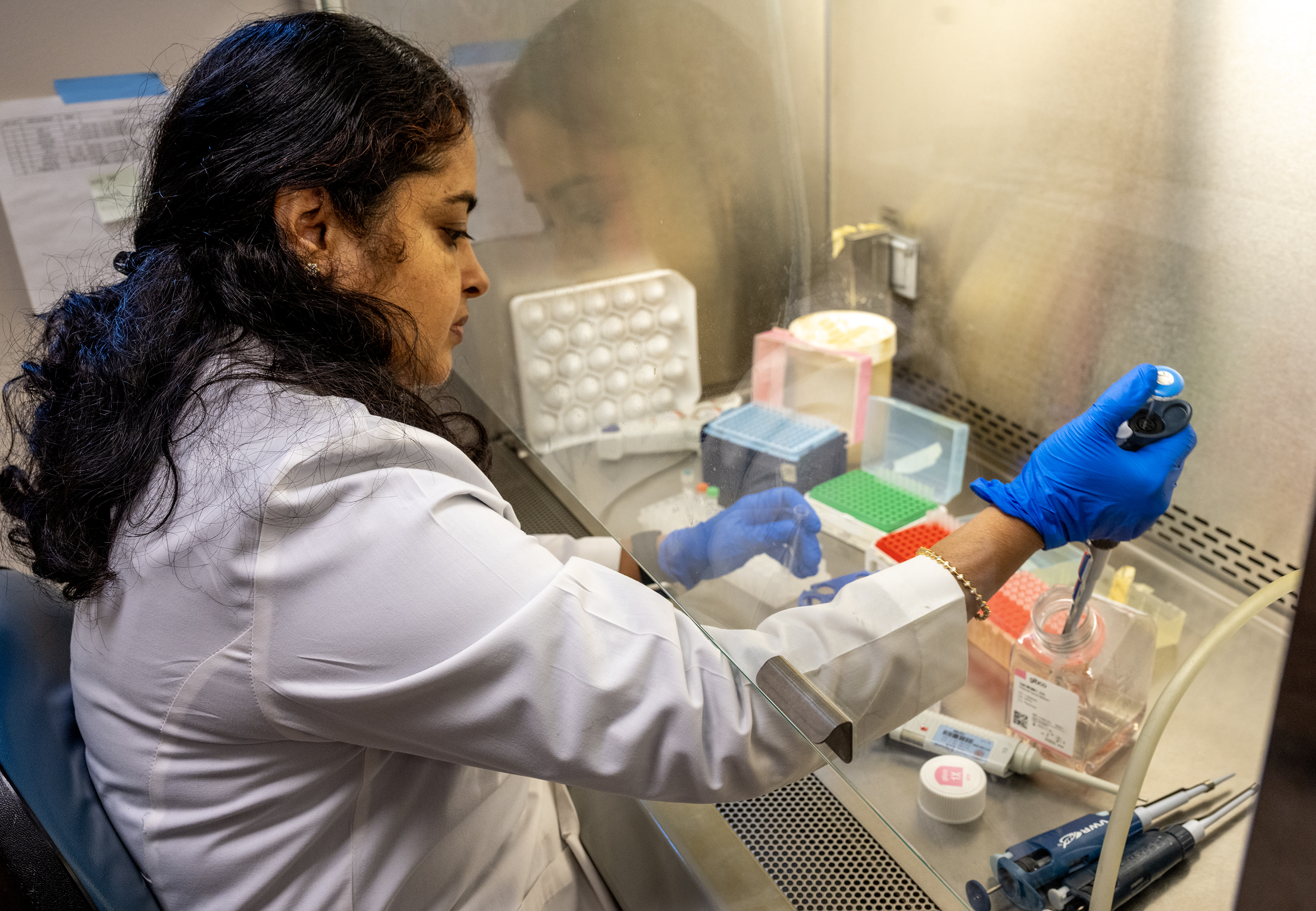
RAMiller Biotechnologies Research
🎯

Late-stage, treatment-refractory cancers (first in class; Molecular Glue AR Degraders)

🧬

AR platform for multiple oncology applications

🔬

Rare neuromuscular polyglutamine repeats expansion disease (Kennedy’s Disease) with no targeted therapeutics

Our Mission: To improve patients' lives through innovation and breakthrough science.

Our Solution: Next-Generation AR Molecular Glue Degraders

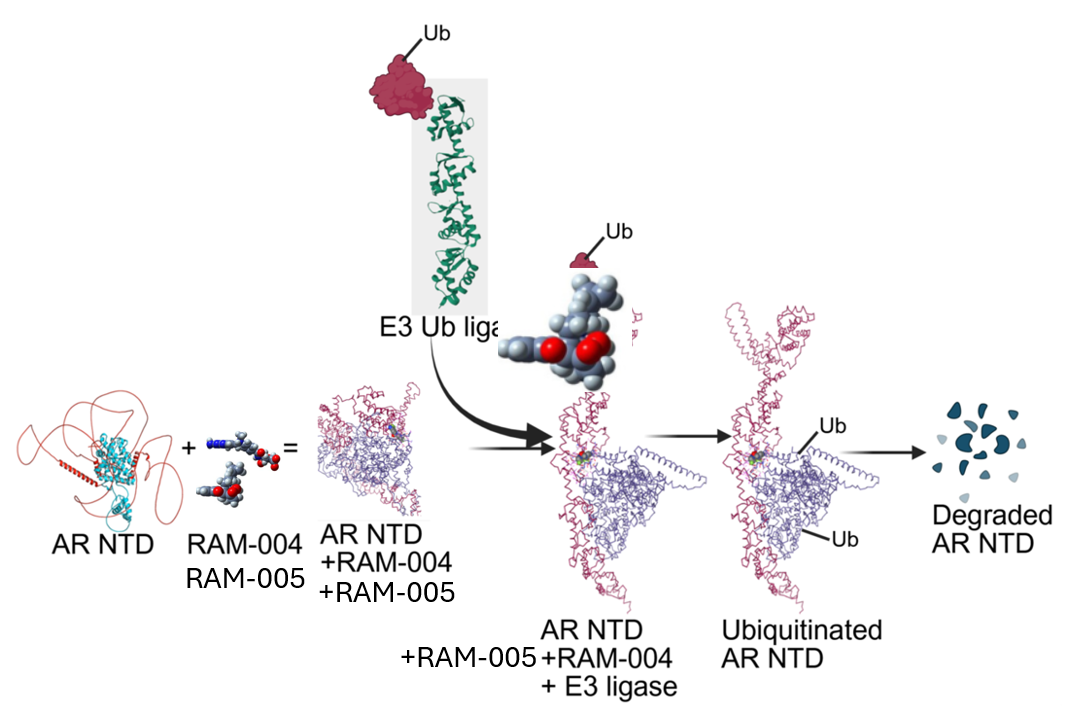
Molecular glues degraders are small molecules that induce or stabilize interactions between a target protein and an E3 ligase, leading to selective degradation of disease-causing proteins. Unlike traditional inhibitors, they degrade the disease-causing proteins by leveraging the ubiquitin, proteasome system.

Molecular Structure Graphic

Key Advantages of Our Molecular Glue Degraders Technology

🎯 Targeted Degradation

Selective elimination of disease-causing proteins through E3 ligase recruitment

⚡ Catalytic Action

Single molecule can bind and degrade target proteins, providing sustained therapeutic effect

🔬 Expanded Druggability

Molecular glue degraders enable new treatments for escape variants

🛡️ Resistance Prevention

This approach will provide durable solution for unmet medical needs

Prostate Cancer Epidemiology

This challenge requires new therapeutic approaches

United States (Latest Data)

New Diagnoses Annually

  • Estimated new cases (2025): ~313,780 prostate cancer diagnoses (American Cancer Society). ACS
  • 2021 confirmed cases: 236,659 new cases; incidence rate of 112 per 100,000 men. CDC

Deaths Annually

  • Estimated deaths (2025): ~35,770 prostate cancer-related deaths. ACS
  • Death rate (2019–2023, age-adjusted): 19.2 per 100,000 men per year. SEER
  • Age-adjusted mortality (broader SEER average): 7.8 per 100,000 overall (all ages combined, 2013–2017 data). Wikipedia

Mechanism of Action (MOA) of RAM-004 and RAM-005

Mechanism of Action of RAM-004: AR NTD, RAM-004, E3 Ub ligase, Ubiquitinated AR NTD, Degraded AR NTD

Innovative Approach: Our next-generation molecular glues target androgen receptor signaling pathways with unprecedented precision, offering new hope for patients with treatment-resistant conditions.

Dual Mechanism: Our compounds simultaneously antagonize and degrade androgen receptor ((AR); wildtype and polyglutamine repeats-expanded) and AR splice variants by binding to the non-canonical N-terminus domain of the AR, addressing key resistance mechanisms in advanced prostate and triple negative breast cancers and Kennedy’s disease (Spinal and Bulbar Muscular Atrophy (SBMA).

Pipeline Overview

RAM-004

Indication: Castration-resistant prostate cancer (CRPC)

Mechanism: Small molecule MGD binding to AR-NTD, antagonizing and degrading AR and AR-SVs

Status: Phase 1/1B Multiple Ascending Dose

Highlights: Well tolerated, showed early efficacy signals

Impact: Addresses AR- and AR-SV-positive CRPC with no current treatment options

RAM-005

Indication: Triple Negative Breast Cancer (TNBC)

Mechanism: Small molecule MGD binding to AR-NTD, antagonizing and degrading AR and AR-SVs

Status: Preclinical development stage

Highlights: Strong efficacy in multiple TNBC animal models

Safety: Large safety window

Impact: Addresses AR- and AR-SV-positive TNBC with no current treatment options

RAM-015

Indication: Spinal and Bulbar Muscular Atrophy (SBMA) or Kennedy’s Disease

Mechanism: Small molecule MGD binding to AR-NTD, antagonizing and degrading polyglutamine repeat-expanded AR

Status: Preclinical development stage

Highlights: Strong efficacy in various transgenic preclinical models with significant improvement in neuromuscular functions and survival

Safety: Large safety window

Impact:Addresses Kennedy’s disease, a rare genetic disease with no treatment options. Aim is to improve quality of life and survival of Kennedy’s disease patients

What to Do Now (CRPC Treatment)

Castration-resistant prostate cancer (CRPC) is subdivided into non-metastatic (nmCRPC) and metastatic (mCRPC), with survival benchmarks, practical next-line choices, and where the real opportunities are.

CRPC Treatment Research

Disease Focus

Prostate Cancer

Leading cause of cancer worldwide; projected 40M men living with it by 2040; >30,000 deaths annually in the U.S. alone

Triple Negative Breast Cancer

Aggressive form of breast cancer; currently no targeted treatments

Spinal and Bulbar Muscular Atrophy (SBMA) or Kennedy’s disease

Currently no targeted treatments

Our Team

Dr. Ramesh Narayanan

Dr. Ramesh Narayanan, Ph.D., MBA

Co-founder, Chief Scientific Officer

  • Muirhead Endowed Professor, College of Medicine, University of Tennessee Health Science Center (UTHSC)
  • Associate Dean of Research, College of Medicine, UTHSC
  • Former Director of Drug Discovery at GTx, Inc.
  • Co-inventor of all RAMiller technologies
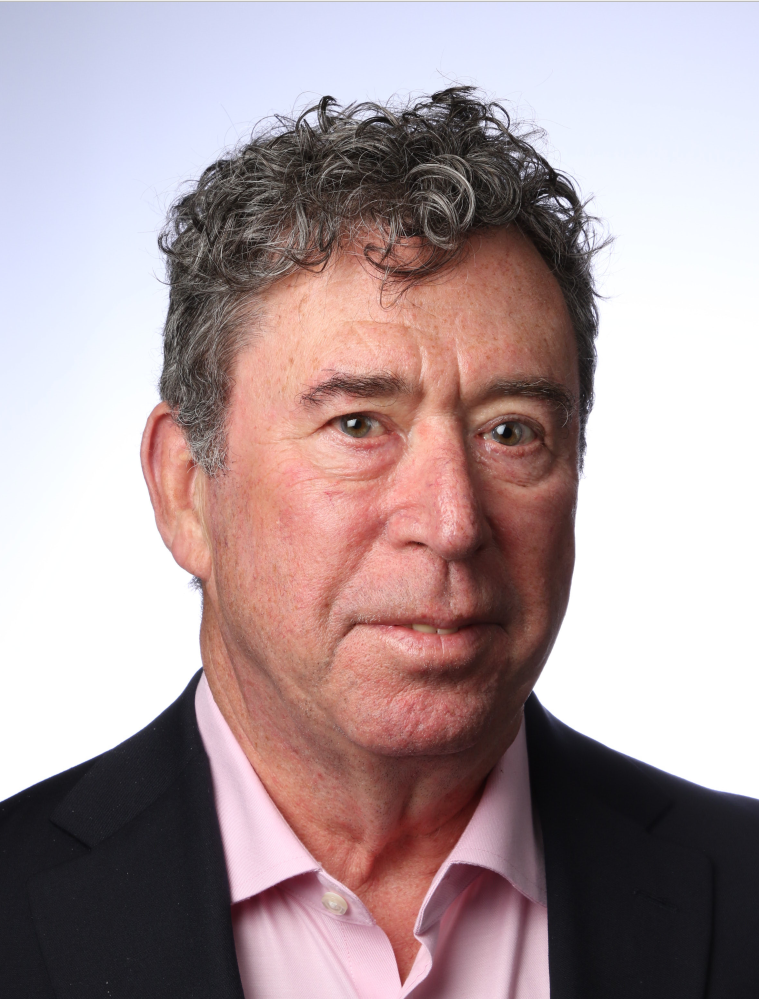
Dr. Duane D. Miller

Dr. Duane D. Miller, Ph.D.

Co-founder, Professor Emeritus, College of Pharmacy, UTHSC

  • 50+ years in medicinal chemistry and drug discovery
  • Inventions include enobosarm and sabizabulin (advanced to Phase III trials)
  • Author of 600+ publications, Inventor on 1000+ patent applications
  • Ph.D., University of Washington (1969)
  • Co-inventor of all RAMiller technologies
Mr. William Farley

Mr. William Farley

Chief Executive Officer

Seasoned executive with over 25 years of experience in global business development, corporate strategy, and commercialization across biotech and pharma sectors.

Recent prior experiences:

  • CEO of ChemDiv, Inc.
  • VP of Business and Corporate Development, Sorrento, Inc. (Managed strategic transactions valued at over $3.6 billion)
  • Leading business development for Eilean Therapeutics, BALA Therapeutics, as well as several other Loch Companies

Current roles:

  • Director, New York Bay Capital
  • Chief Business Officer, Expert Systems (Leads commercialization efforts for AI and LLM platforms)
Download Full Bio (DOC)
Dr. Robert H. Getzenberg

Dr. Robert H. Getzenberg, Ph.D.

Chief Medical Officer

Dr. Getzenberg is responsible for the development of a companion diagnostic that accompanied the Phase 3 metastatic breast cancer program. He oversaw major elements of the clinical program with the mission of bringing novel agents into clinical practice. Dr. Getzenberg provided oversight and data analysis of the Phase 2 program evaluating sabizabulin in patients with metastatic castrate resistant prostate cancer as well as involvement in the planning and execution of the VERACITY Phase 3 clinical trial of sabizabulin in this same population. He led efforts to clinically evaluate enobosarm as an agent to provide bipolar androgen therapy (BAT) in men with advanced prostate cancer in a Phase 2 trial. Dr. Getzenberg provided the clinical support on the approval and release of Entadfi for the treatment of BPH including developing the clinical messaging and strategy.

Dr. E. William Radany

Dr. E. William Radany, Ph.D.

Scientific Advisor

E. William Radany, PhD, brings over 40 years of experience in the biotechnology industry, with a strong track record of scientific innovation, executive leadership, and company building. Prior to serving as CEO of AssayQuant, Dr. Radany founded the synthetic biology companies VertuBio and Verdezyne, and served as President and CEO of High Throughput Genomics, Inc., a pioneer in array-based gene expression assay technologies for the life sciences sector. Earlier in his career, he was President of Biacore and the founding CEO of NeoGenex. Dr. Radany has also held key executive roles at leading biotech firms including Xencor, Caliper Technologies, and Stratagene, where he was instrumental in forging strategic partnerships with major pharmaceutical and biotechnology companies. Dr. Radany earned his Bachelor of Science degree in Cell Biology from Colorado State University, and holds a Ph.D. in Biochemistry and Physiology from the University of Wyoming.